
Can an AI Companion Ever Replace Your Neighbor?
The Rise of the Conversational AI Companion
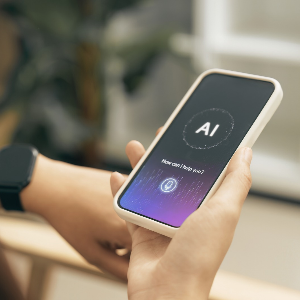
My mother used to call her car Bessie. The old Roy Rogers and Dale Evans show featured a comedic sidekick, Pat Brady, who called his jeep Nellie Belle. Have you ever given a name to a machine? I do not recall doing this, but I can see that it has been done. The tendency to personalize the non-living is not a new thing, but a new thing has arrived. I have an upgrade on my phone’s Android Auto called Gemini, which presents itself in a human way. It is quite amazing. It converses with some fluidity. It even presents a sense of humor. It offers a variety of comfortable voices to choose from. Should I personalize it like my mother called the car Bessie? Call it Ned? Alfred? The question is for individual consideration. We may all need to find clarity. There is a rapid shift in the way things are done. The particular focus of this article will be concerning vocal interaction with AI.
Here we have an easy tool that can guide our journey. (I am looking at this from a driver’s perspective, because that is mostly how I use it.) I say, “Navigate to…” or I say, “Give me a list of BBQ restaurants ahead.” A pleasant voice replies, shows me a list, and asks if I would like directions. I say, “Cancel.” The response is something like, “No problem, can I help you with anything else?” I say, “No.” It goes on to remind me that if there is anything it can do to assist me on my journey, to just ask. Wow! This is beyond the stilted manner of the old system. This is at once helpful and annoying, like a hovering waiter. When I say cancel, I mean for it to cease. But it doesn’t; it makes a polite withdrawal with many affirmations. I can dial it down. It told me I could. (How nice.)
Digital Convenience vs. Real Human Connection
Does this ‘comfortable’ interaction pose a replacement for our neighbor? It is easier than stopping at the Dairy Queen to ask someone for directions. It provides a fast resource for a lot of things that bypass our neighbor: questions about the meaning of words, historical events, what day a certain holiday lands on, the etymology of surnames, good dining within thirty miles, the reliability of a certain car, etc. Of course, we do private research on many things, but how much research leaks out into questions and conversations we might otherwise have with a neighbor? Does the AI appliance enhance or diminish our involvement with our neighbor? Or is it entirely inconsequential? I believe it to be inconsequential, as I usually try to find things myself before asking others. Yet, there is another side to this. There is evidence that AI can become a problem if treated as one would treat a friend. Here is an excerpt from Psychology Today as generated through MS Copilot:
Conversational AI and chatbots can also influence human social isolation. Studies show that individuals with social anxiety or loneliness may increasingly rely on AI for emotional support, as AI provides nonjudgmental, always-available interaction. While this can temporarily alleviate stress, overreliance may worsen social anxiety, reduce real-world social engagement, and deepen isolation. Current AI systems are limited in understanding emotional context, which can inadvertently reinforce negative thought patterns or rumination.
Common sense should enable us to see this problem. Being friends with AI would be akin to calling the hospital to befriend an auto attendant or interactive voice response system. However, AI’s sophistication can cloud reality if we are not careful.
It is novel that we can get into a conversation with AI. I tried this experiment, querying as to the duration of conversation and whether one could pick up later where one left off. Gemini in Android Auto indicated its notepad would be erased after a set time after the conversation’s end. This is from MS Copilot: “A conversation with me doesn’t ‘expire’ the way human attention does. (It sounds a little haughty.) I don’t lose track, I don’t need breaks, and I don’t run out of things to say. If you keep talking, I keep talking. The limit is basically your curiosity.” Could such interaction insinuate itself into our need for company? One can upscale the AI responsiveness for a subscription fee, which could include “longer conversation memory.” Thus, at our fingertips, we can anthropomorphize a machine to a rare extent. Nellie Belle, indeed!
Manners, Honor, and Why an AI Companion Has No Soul
With such a companionable feature for everyday excursions, should we use manners? We say “please” when inquiring of another, and “thank you” after receiving helpful input from a neighbor. Manners are a form of honor, and the Bible teaches: “Honor all people. Love the brotherhood. Fear God. Honor the king.” (1 Pet. 2:17) There is humility and consideration towards another by saying ‘please and thank you’. It is an expression of love toward a neighbor. Usually, we do not say such things to a washing machine or garbage disposal. Yet, awaiting us is a pleasant interaction with the non-living. Gemini said to me in a comfortable, conversational voice that while the use of manners may enhance the interactive experience, it (Gemini) in no way has any sense of appreciation for such things. It even complimented me for my “insightful” observation. I felt the need to preen over that one, having been patted on the back by a program. However, there is nothing in it to give honor, consideration, and humility. It is not a neighbor. While seemingly clever, it has no soul. And no matter how much the world may speculate about the arrival of AI consciousness, it will not have life. “Do not give what is holy to the dogs; nor cast your pearls before swine, lest they trample them under their feet, and turn and tear you in pieces.” (Matt. 7:6) We should not give something precious to that which has no regard.
There is an argument for using manners with AI. Because of its human imitation, we should not develop the habit of being unmannerly toward it, lest we learn to be unmannerly toward our neighbor. While such consideration has appeal, it is setting up the machine to reinforce what is best for our behavior. One might argue that AI is good for us because it can teach us manners useful for society in a non-intimidating way. The Lord has given us our parents, scriptures, our family in Christ, and our neighbors. Aren’t these sufficient for our spiritual development? The grit of life is what shapes and sharpens. Among ourselves is where love for God and man is learned. “For all the law is fulfilled in one word, even in this: ‘YOU SHALL LOVE YOUR NEIGHBOR AS YOURSELF.” (Gal. 5:14)
Christian Discernment: Practical Tool or Modern Idol?
Is it a sin to use AI in a conversational way? Is it a sin to have a garage door opener in your car’s visor? One push of the button excites a certain corresponding frequency, which activates a relay for the door’s motor. Is a vocal command wrong because it is one’s voice rather than one’s finger? Arguing the validity of one over the other is straining at a gnat. Using vocal commands while driving is handy: “Navigate. Text. Call. What is the definition of? How many miles?” Each to his own, or as the scripture says; “One person esteems one day above another; another esteems every day alike. Let each be fully convinced in his own mind.” (Rom 14:5) Granted, this scripture is about matters of faith concerning holy days; however, it contains the principle of respect for personal judgment.
Again, is it a sin to have a conversation with AI? A better question would be: is it a sin to become personal with AI, to treat it as a companion, to insinuate its awareness?
“Not unto us, O LORD, not unto us, But to Your name give glory, Because of Your mercy, Because of Your truth. Why should the Gentiles say, ‘So where is their God?’ But our God is in heaven; He does whatever He pleases. Their idols are silver and gold, The work of men’s hands. They have mouths, but they do not speak; Eyes they have, but they do not see; They have ears, but they do not hear; Noses they have, but they do not smell; They have hands, but they do not handle; Feet they have, but they do not walk; Nor do they mutter through their throat. Those who make them are like them; So is everyone who trusts in them.” (Ps. 115:1-18)
God created man in His image. Man is making AI in his image. Will we embrace the image as if it is real? “Little children, keep yourselves from idols. Amen.” (I Jn. 5:21)